Surface finishing is no longer a labor-intensive task It is now a process that is precision-driven. In the manufacturing world of today, coating quality is directly related to longevity, corrosion resistance and perception. Many facilities use paint robots to improve control and consistency as global standards become more stringent and customers expect flawless finish.
Modern paint machines offer programmable precision and precise motion to applications that previously relied on the skill of the operator. By automating spray paths, speeds, and angles for application Manufacturers eliminate a number of the inconsistencies that cause uneven film construction or excessive material use. This process of coating that is predictable supports First Time Quality, and minimizes the need for rework.
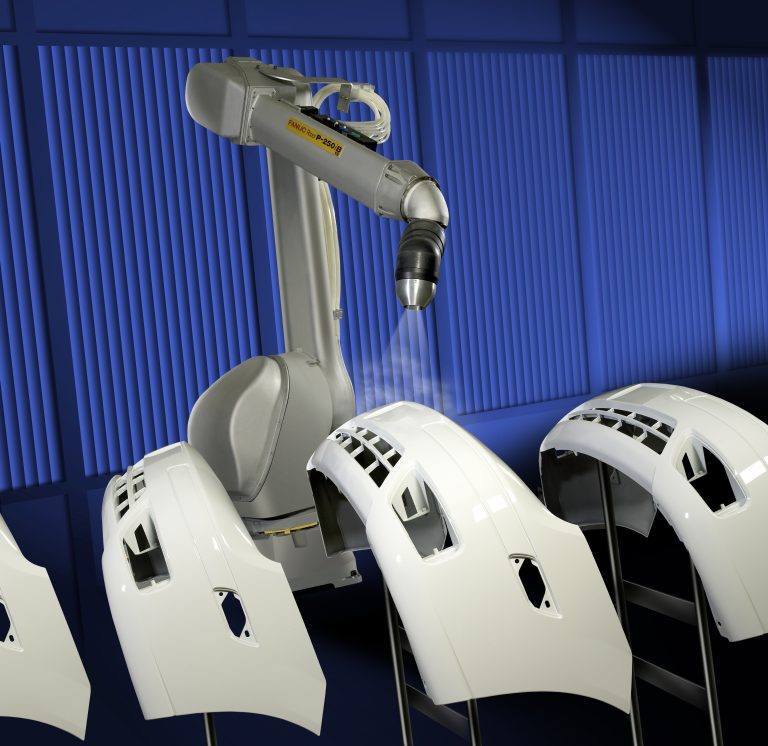
Image credit: automatedsolutions.com.au
Consistency Performance, Efficiency, and Measurable gains
The human factor or small variations in the technique could cause variations in the thickness and coverage of the manual paint. Paint robots remove that variability by repeating identical motion patterns through every cycle of production. This kind of repetition provides an uniform surface finish and optimal material distribution throughout the entire part.
Advanced paint systems for robotics also increase the efficiency of transfer. The amount of paint that is sprayed over the surface is reduced when the distance and direction between the applicator’s and component’s are kept precisely. A lower amount of material waste directly affects cost savings, while reduced emissions of volatile organic compounds support green initiatives.
Integrating fluid handling into paint robotics guarantees consistency in mixing ratios of multi-component coatings. Inconsistencies can be eliminated which can compromise the integrity and quality of the final product. The combination of steady flow control and programmable parameters allows producers to fine tune atomisation settings and spray patterns in real-time, without interruption to production.
Productivity and safer working environments
The main benefit of implementing an automated painter is an increase in uptime. As opposed to manual processes, robot paint cells operate continuously with very little interruption. After they are programmed they produce a consistent output without needing breaks or continuous monitoring.
It is crucial to think about safety when working in a facility that utilizes bi-component solvents or solvent-based coatings. Paint atomized can create hazardous conditions, particularly when working with materials that can be flammable or reactant. Modern paint robots are developed to be safe even in the most challenging conditions. They can reduce the exposure of personnel to hazardous chemicals and boost safety in workplaces.
The technology of conveyor tracking enhances productivity further by allowing robot-controlled painting of parts while they are moving. This technology increases the working space, and also ensures that production lines are running efficiently.
Australian Automation Expertise Supporting Industry
It is vital that manufacturers have access to automation partners that are skilled. Automated Solutions in Australia has earned a reputation of providing advanced robotic integration services. With extensive knowledge in automation engineering, the team works as certified FANUC robot integrators, helping businesses implement tailored robotic paint solutions that align with their operational goals.
Automated Solutions helps manufacturers evaluate their processes, and design robotic paint cells, combining experience from industry with technical expertise. Facilities will gain a greater understanding of how to improve performance by co-operative planning, simulation and system integration.
Implementing paint robotics is not simply about automation; it will result in tangible improvements to quality as well as safety and efficiency. A well-engineered paint robotics system transforms the process of finishing surfaces into a precise efficient, repeatable, and economical process. Manufacturers can enhance their competitiveness by working with experts in automation that have the experience to help them to succeed over time in an ever more demanding.